

Crude Glycyrrhizic Acid: Production, Properties, and Applications
Abstract
Crude Glycyrrhizic Acid (CGA), derived from the root of Glycyrrhiza glabra, is a bioactive compound rich in glycyrrhizin, widely utilized in pharmaceutical, cosmetic, and food industries. This article reviews the production methods, chemical properties, and diverse applications of CGA, highlighting its therapeutic potential and challenges associated with its crude form.
Introduction
Glycyrrhiza glabra (licorice) has been valued for centuries in traditional medicine due to its bioactive constituents, notably glycyrrhizin. Crude Glycyrrhizic Acid (CGA) is an unrefined extract containing glycyrrhizin (30–50% w/w), flavonoids, and other secondary metabolites. Its versatility stems from anti-inflammatory, antiviral, and sweetening properties, though impurities necessitate careful processing for specific applications.
Production of Crude Glycyrrhizic Acid
Raw Material
Licorice roots, harvested from 3–4-year-old plants, are the primary source of CGA. Roots are cleaned, dried, and pulverized to increase extraction efficiency.
Extraction Process
- Solvent Extraction: Pulverized roots are treated with hot water or aqueous ethanol (50–70%) at 60–80°C for 4–6 hours. This yields a crude extract containing glycyrrhizin, polysaccharides, and flavonoids.
- Acid Precipitation: The extract is acidified (pH 2–3) using hydrochloric or sulfuric acid to precipitate glycyrrhizin as CGA. The precipitate is filtered and washed to remove water-soluble impurities.
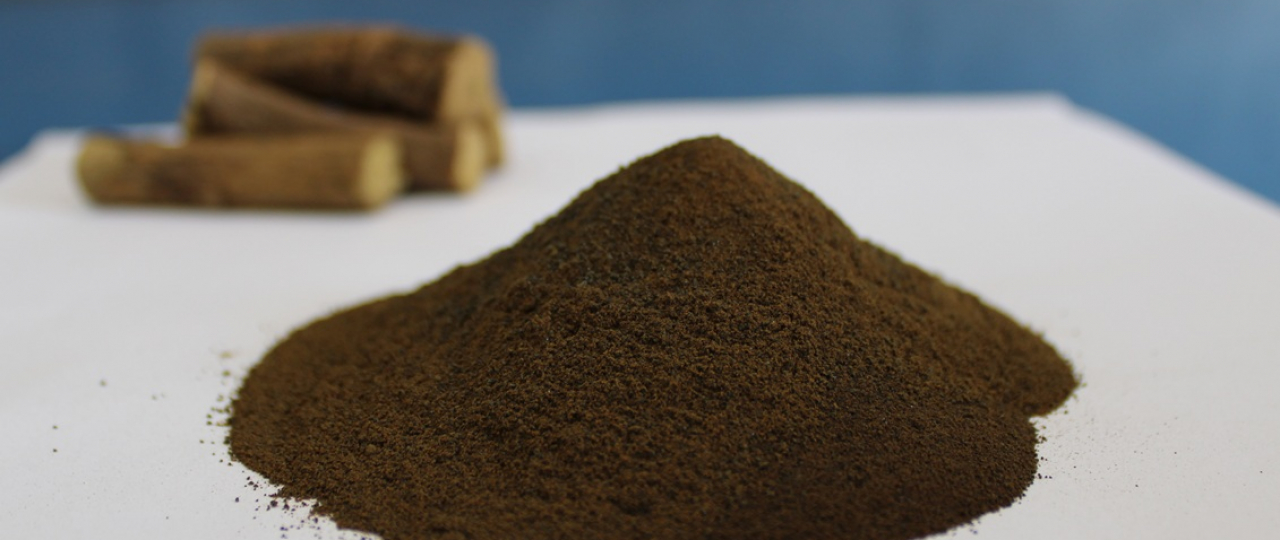
- Drying: The precipitate is dried at 50–60°C, yielding CGA as a brownish powder with a glycyrrhizin content of 20–50%.
Challenges
- Impurities: Crude extracts contain tannins, sugars, and other phenolics, complicating purification.
- Environmental Impact: Acidic wastewater requires neutralization, increasing production costs.
- Yield Variability: Glycyrrhizin content varies with plant age, soil conditions, and harvest season.
Chemical Composition and Properties
CGA primarily consists of glycyrrhizin (C42H62O16), a triterpenoid saponin, alongside flavonoids (e.g., liquiritin), coumarins, and polysaccharides. Key properties include:
- Sweetness: Glycyrrhizin is 50–100 times sweeter than sucrose.
- Pharmacological Activity: Anti-inflammatory, antiviral, hepatoprotective, and immunomodulatory effects.
- Solubility: Moderately soluble in water and ethanol, insoluble in neutral solvents.
Applications
Pharmaceutical Industry
CGA is employed in formulations for:
- Respiratory Disorders: Acts as an expectorant in cough syrups due to its mucolytic properties.
- Gastrointestinal Health: Protects gastric mucosa, aiding in ulcer and gastritis treatment.
- Antiviral Therapy: Inhibits viral replication (e.g., hepatitis C, SARS-CoV-2) by interfering with viral entry and replication.
- Limitations: High doses may cause pseudoaldosteronism, leading to hypertension and hypokalemia.
Cosmetic Industry
- Skin Brightening: Inhibits tyrosinase, reducing hyperpigmentation.
- Anti-Inflammatory: Soothes irritated skin, effective in acne and eczema treatments.
- Antioxidant: Neutralizes free radicals, contributing to anti-aging products.
Food Industry
- Sweetener: Used in confectionery, beverages, and chewing gum as a natural sweetener.
- Flavor Enhancer: Enhances taste in sauces, snacks, and brewed beverages.
Safety and Regulatory Considerations
CGA is generally recognized as safe (GRAS) by regulatory bodies, but excessive consumption (>100 mg/day glycyrrhizin) may lead to adverse effects, including hypertension and edema. The European Union limits glycyrrhizin in food to 100 mg/kg. Purification to pharmaceutical-grade glycyrrhizic acid is required for sensitive applications to minimize side effects.
Future Perspectives
Advancements in extraction technologies, such as ultrasound-assisted extraction and supercritical CO2, promise higher yields and purity. Research into CGA’s role in immunotherapy and oncology is ongoing, with potential applications in drug delivery systems (e.g., nanoparticles). Sustainable cultivation of licorice and eco-friendly processing methods are critical for scaling production.
Conclusion
Crude Glycyrrhizic Acid is a versatile natural compound with significant potential across multiple industries. While its production is cost-effective, challenges related to impurities and environmental impact necessitate innovation. Continued research into its pharmacological and industrial applications will further unlock CGA’s value as a sustainable bioactive resource.
References
- Asl, M. N., & Hosseinzadeh, H. (2008). Review of pharmacological effects of Glycyrrhiza sp. and its bioactive compounds. Phytotherapy Research, 22(6), 709–724.
- Wang, X., et al. (2020). Glycyrrhizic acid: A promising antiviral agent against SARS-CoV-2. Journal of Functional Foods, 74, 104213.
- European Commission. (2012). Regulation (EC) No 1334/2008 on flavorings and certain food ingredients.